Inside the Data Pipelines That Power Real-Time Leaderboards and Tournament Payouts in Virtual Slot Competitions
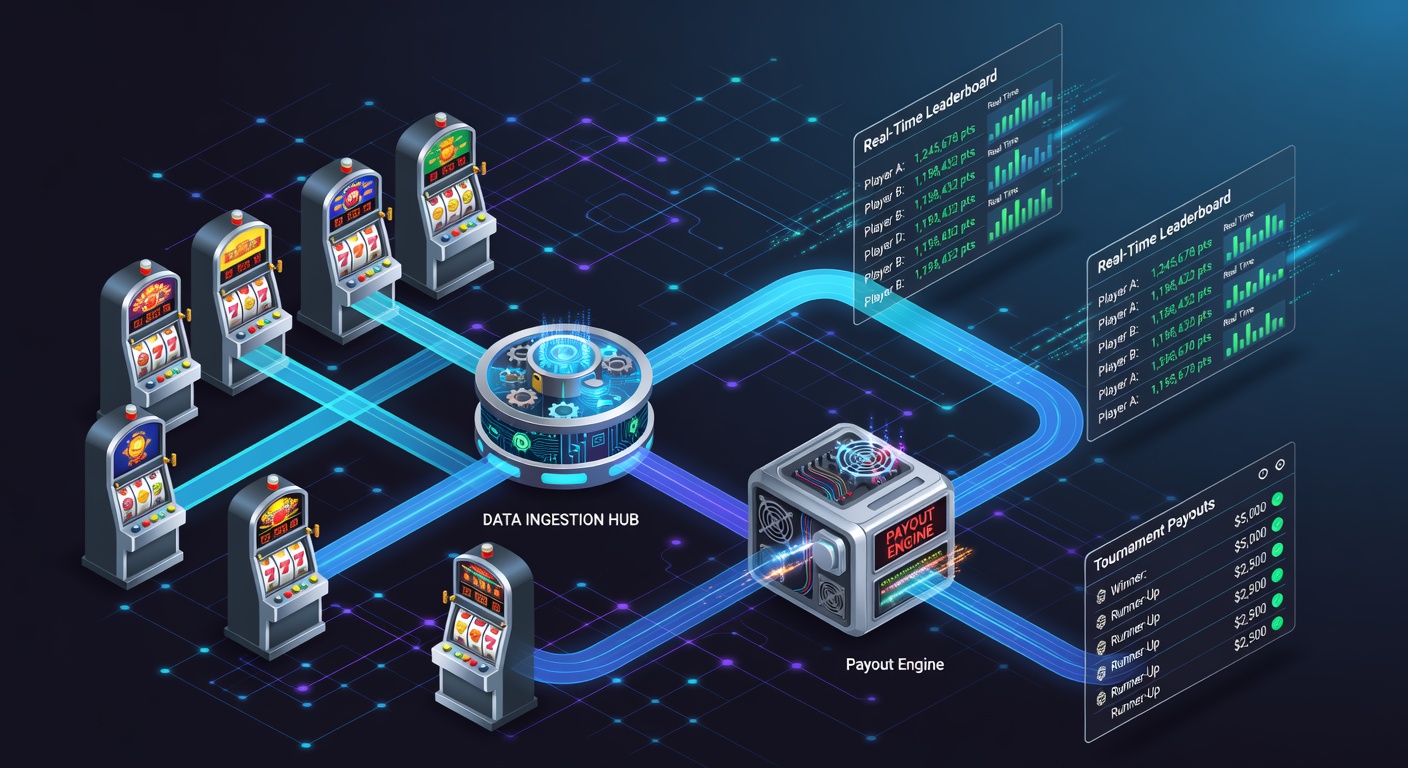
Data pipelines in virtual slot competitions handle continuous streams of player activity from thousands of concurrent sessions, and these systems route every spin result through ingestion layers before aggregation occurs. Operators rely on event-driven architectures that capture metrics like wager amounts, win multipliers, and session durations at the point of generation, while Apache Kafka clusters often manage the initial buffering to prevent bottlenecks during peak tournament hours. In June 2026 several platforms reported scaling these ingestion points to accommodate simultaneous entries exceeding 50,000 users across multiple time zones.
Ingestion and Initial Processing Layers
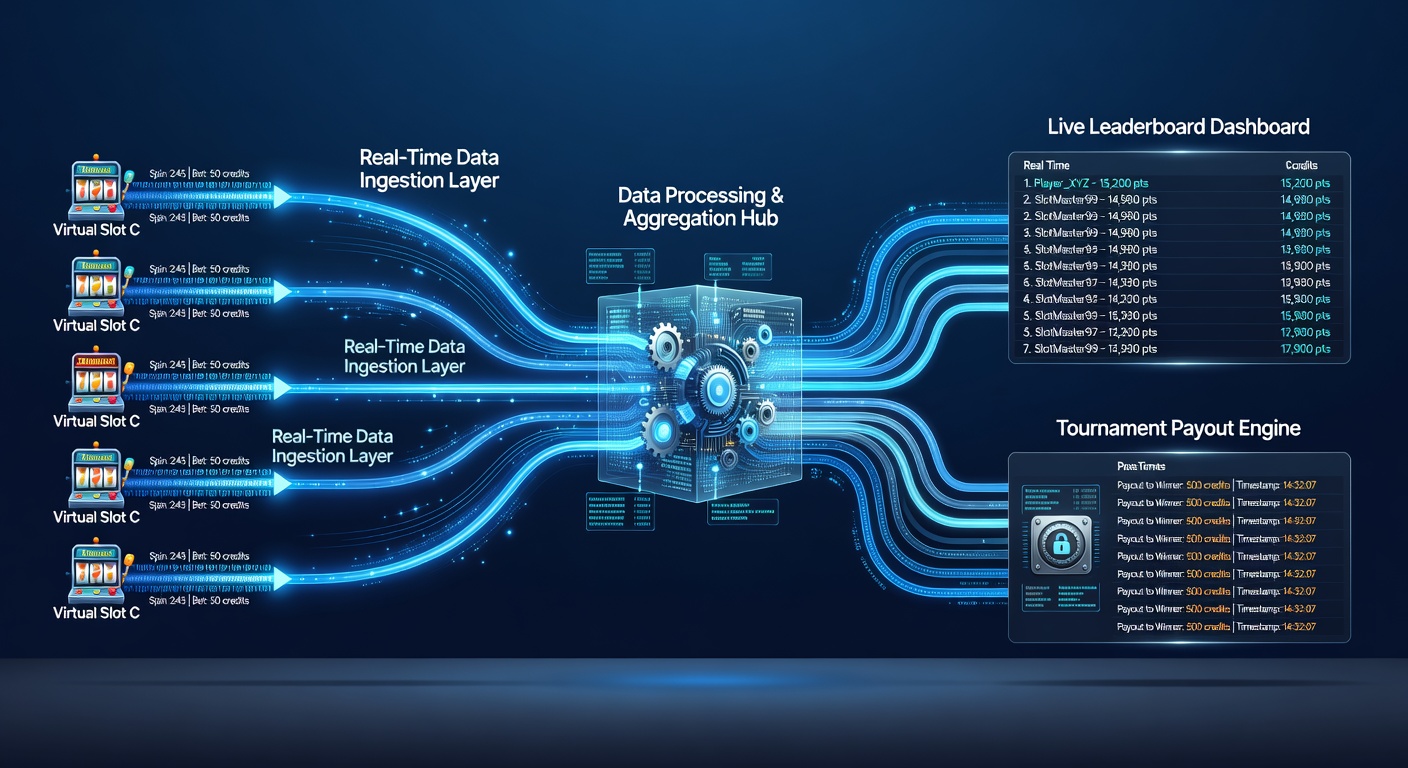
Raw event data arrives from game servers in structured JSON payloads that include timestamps accurate to the millisecond, player identifiers, and machine-specific seeds, after which microservices validate each record against predefined schemas before forwarding it downstream. Researchers at institutions studying distributed systems have documented how these validation steps reduce latency by filtering malformed entries early, and platforms integrate similar checkpoints to maintain leaderboard accuracy under high load. Data indicates that typical pipelines process between 200,000 and 400,000 events per minute during major competitions, with parallel topic partitions allowing horizontal scaling without service interruption.
Real-Time Aggregation for Leaderboards
Once validated, events flow into stream-processing engines such as Apache Flink or Spark Streaming that compute running totals for metrics like total winnings, average bet size, and completion rates. These engines maintain in-memory state stores that update every few hundred milliseconds, enabling leaderboards to refresh without requiring full database queries on each request. Observers note that windowing functions group results into sliding intervals, which prevents older data from skewing current rankings while still preserving historical context for dispute resolution. External reporting from the New Jersey Division of Gaming Enforcement shows that regulated operators must retain these aggregated snapshots for audit periods of at least 90 days, creating additional storage demands within the same pipeline.
Leaderboard Synchronization and Display Systems
Processed aggregates feed into dedicated caching layers using Redis or similar in-memory databases that serve API endpoints consumed by both web and mobile clients. Synchronization protocols push delta updates rather than full leaderboard dumps, which keeps bandwidth usage low even when hundreds of players monitor the same competition simultaneously. Those who have studied these implementations report that conflict-resolution mechanisms resolve ties by secondary criteria such as earliest achievement timestamp, and the entire process completes within sub-second windows to preserve competitive fairness.
Payout Calculation and Verification Workflows
Tournament payouts trigger once final rankings stabilize, at which point the pipeline routes verified totals through a separate financial computation module that applies prize structures stored as configurable rulesets. These modules cross-reference leaderboard positions against prize pools funded by entry fees or operator contributions, then generate transaction records that move to payment gateways. Studies from university research groups on financial data systems indicate that cryptographic hashing of each payout record occurs before ledger entry, providing an immutable trail that regulators can query during compliance reviews. Platforms operating under frameworks similar to those outlined by the Australian Gambling Research Centre incorporate additional checksum validations to detect any discrepancies between computed winnings and actual fund transfers.
Security, Compliance, and Scalability Measures
Encryption protocols secure data both in transit and at rest throughout the pipeline, while role-based access controls limit which internal teams can view raw player identifiers versus aggregated statistics. Automated monitoring tools track pipeline health metrics such as throughput rates and error counts, triggering alerts when thresholds indicate potential congestion. Data shows that operators routinely conduct load tests simulating tournament volumes 150 percent above historical peaks to verify resilience ahead of scheduled events, and these tests often reveal the need for additional partition rebalancing within Kafka topics. In regulated markets, independent testing laboratories periodically review the entire data flow to confirm that leaderboard logic and payout formulas match approved specifications.
Conclusion
Virtual slot tournament pipelines integrate ingestion, stream processing, caching, and financial modules into a cohesive system that supports real-time leaderboards and automated payouts. Continued refinements in June 2026 focus on reducing end-to-end latency while expanding audit capabilities, ensuring that growing participation volumes do not compromise either speed or regulatory compliance.