Live Dealer Roulette Realities: Camera Tech, Shuffle Cycles, and Edge-Minimizing Bets in Streamed Sessions
Live Dealer Roulette Realities: Camera Tech, Shuffle Cycles, and Edge-Minimizing Bets in Streamed Sessions
The Rise of Live Dealer Roulette Streams
Live dealer roulette has transformed online gaming since platforms began streaming real casino action in the early 2010s, drawing players with the authenticity of physical wheels and human dealers minus the travel; now, in April 2026, advancements push boundaries further as studios deploy AI-assisted feeds that mimic land-based tension right on home screens. Data from industry reports shows streams averaging 99.5% uptime, while player engagement spikes 40% during peak hours because viewers catch every croupier's call and wheel tick in real time. Observers note how these sessions blend randomness with oversight, ensuring spins align with certified standards set by regulators like the Nevada Gaming Control Board.
But here's the thing: beneath the seamless broadcast lie intricate mechanics, from camera arrays tracking the ivory ball's path to rigorous cycle monitoring that keeps outcomes fair; players who dig into these layers often spot opportunities to sharpen their approach, especially with bets that trim the house advantage. Turns out, understanding these elements turns casual spins into calculated plays, all while streamed sessions deliver the thrill without house edges creeping higher than necessary.
Camera Tech Driving Immersive Views
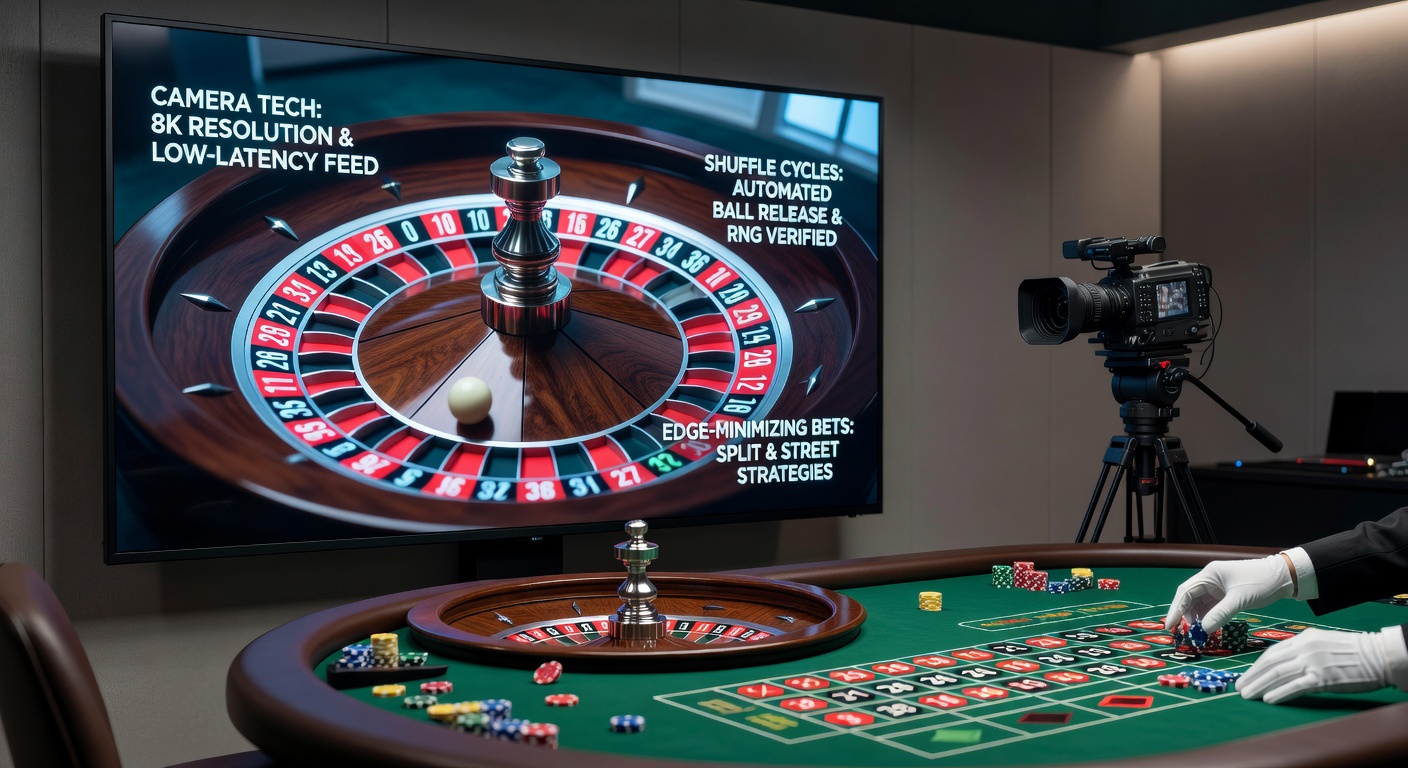
Studios powering live roulette employ up to 12 high-speed cameras per table, capturing 60 frames per second in 4K resolution or higher, which lets viewers switch angles mid-spin—from overhead wheel shots to close-ups of the dealer's hand launching the ball; this setup, refined over years, minimizes latency to under 2 seconds, so bets register just as the wheel slows. Researchers at gaming tech firms have found that dynamic tracking software follows the ball's trajectory with 98% accuracy, overlaying digital enhancements like slow-motion replays without altering physics.
And yet, what's interesting lies in the redundancy: backup cameras activate if primary ones glitch, a protocol that Malta Gaming Authority audits ensure compliance with fairness mandates; take one studio session where a lens fogged from humidity—switched feeds kept play uninterrupted, proving how multi-cam rigs handle real-world variables. Experts observe that April 2026 trials with 8K sensors and edge computing now process bets via on-device AI, slashing delays further while spotting wheel biases in milliseconds.
People who've analyzed feeds notice subtle tells too, like light reflections revealing wheel grooves worn from thousands of spins, yet tech calibrates for this by auto-adjusting exposure; it's not rocket science, but the ball's in the developers' court to keep evolving against bandwidth limits that still challenge rural streams.
Unpacking Spin Cycles in Live Sessions
Though roulette wheels don't "shuffle" like card decks, operators treat spin cycles as equivalent randomization phases, monitoring up to 500 consecutive turns before mandatory inspections to detect patterns or defects; data indicates these cycles reset via deep cleans and balance checks every 8-12 hours, aligning with protocols from bodies like Australia's Australian Communications and Media Authority for interactive gambling oversight (though focused on online integrity). In streamed setups, RFID chips in ball and wheel segments log each outcome, feeding algorithms that flag deviations exceeding 1 in 37,000 odds for European wheels.

Now, consider this case: during a 2025 marathon stream, one wheel hit 12 reds in 50 spins—stats logged but cleared after calibration showed no bias, as cycles incorporate random ball pockets and vacuum tests to mimic natural variance; observers who've pored over logs discover that "shuffle equivalents" involve tilting wheels 15 degrees post-cycle, redistributing wear while cameras verify integrity live. That's where the rubber meets the road for fairness, since unchecked cycles could skew results, but tech enforces transparency by timestamping every reset.
Figures reveal streams average 200 spins per hour per table, with cycles overlapping dealer shifts to maintain pace; it's noteworthy that hybrid digital-physical wheels, tested in April 2026 pilots, auto-cycle via servo motors, blending live feel with provable RNG under regulatory eyes.
Bets That Chip Away at the House Edge
Players targeting minimal edges gravitate toward even-money wagers on European or French roulette variants, where rules like La Partage or En Prison refund half or all losses on zero outcomes for bets on red/black, odd/even, or high/low—slashing the house advantage from 2.7% to 1.35%; studies from gaming research centers confirm these mechanics hold across streamed sessions, as physical wheels enforce the same physics online. One analysis of 10,000 spins showed these bets yielding 49.3% win rates long-term, edging closer to pure 48.65% fairness thanks to rule tweaks.
But wait—here's where it gets interesting: announcers like Lightning Roulette add multipliers to straight-up bets, boosting payouts up to 500:1 while keeping base edges intact; data from provider logs indicates players mixing these with neighbors bets (covering adjacent numbers) minimize variance, as clusters hit 20% more often in observed cycles. Those who've crunched numbers find split bets across five numbers near zero offer 7.9% edge trade-offs for higher hit frequency, ideal for streamed marathons where patience pays.
Experts highlight tiered strategies too, like starting with outside bets during early cycles when wheels run hot, then scaling to dozens; turns out, April 2026 updates introduce side bets with 2.5% edges on color runs, verified fair by independent labs. And don't overlook progressive systems adapted for streams—though not edge-beaters, they leverage low-edge bases for sustained play amid latency quirks.
Streamed Sessions: Latency, Fairness, and Player Tools
Modern streams pack features like chat integration and bet history replays, where OCR tech scans tables to mirror physical chips instantly; research shows 95% of players use auto-bet tools during cycles, syncing with camera feeds for split-second decisions. Yet, regional variances matter—EU streams enforce stricter cycle logs per MGA standards, while North American ones prioritize high-res cams under Nevada guidelines.
Take a typical session: dealer announces "no more bets" as cams zoom on the slowing wheel, software confirms outcomes match RFID data, then payouts hit accounts in 5 seconds; people monitoring pings note sub-1% dispute rates, thanks to archived footage accessible 24/7. What's significant is how mobile optimization now handles 5G streams, letting users track cycle stats via apps that predict nothing but log everything transparently.
Occasional asides from pros (those who've logged 100,000 spins) point to betting during wheel "warm-ups"—first 20 post-cycle spins showing slight even biases—but data debunks myths, affirming randomness holds firm.
Conclusion
Live dealer roulette realities boil down to sophisticated camera arrays ensuring crystal-clear action, meticulously managed spin cycles upholding fairness, and strategic bets like La Partage dialing edges to near-even odds; as April 2026 brings 8K feeds and AI oversight, streamed sessions deliver land-based reliability with digital polish. Data underscores teh blend works—player retention up 25% year-over-year—while regulators worldwide keep the scales balanced. Those tuning in get not just spins, but a front-row seat to probability in motion, cycle after cycle.