Regulatory Frameworks Shaping Software Update Cycles for Interactive Gaming Interfaces Across Multiple Jurisdictions
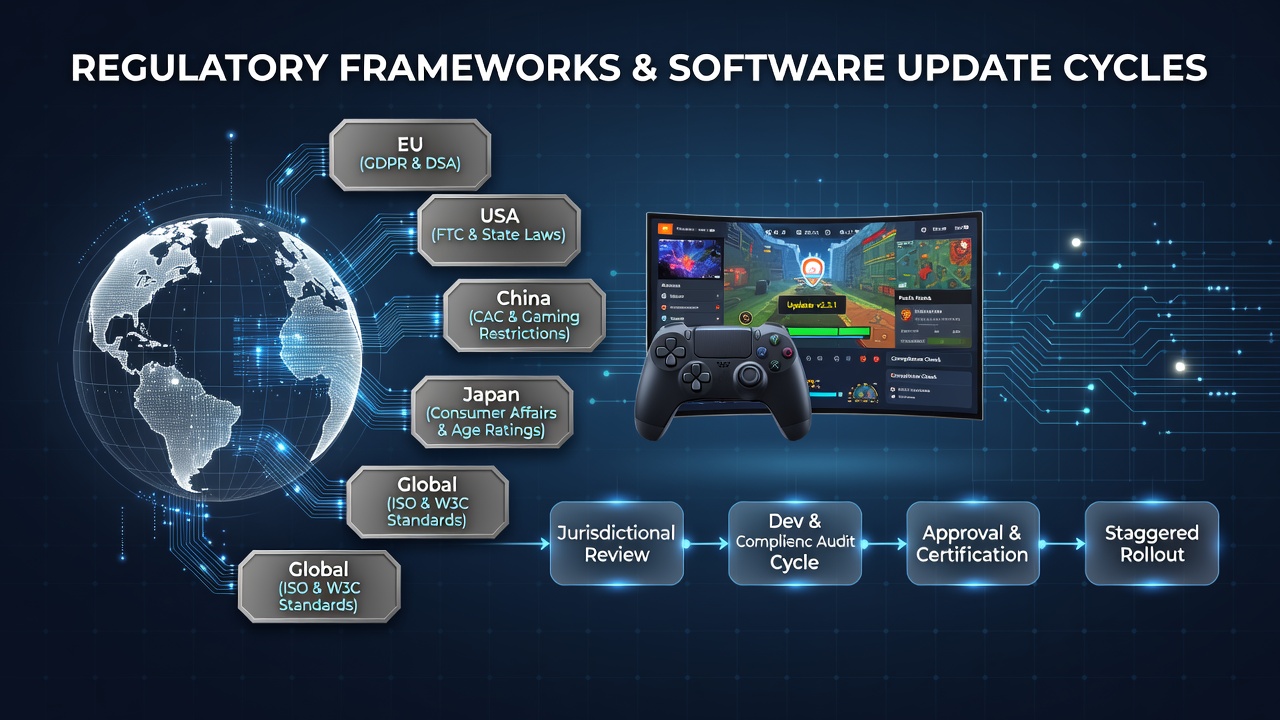
Regulatory frameworks in various jurisdictions establish specific requirements that directly influence how developers manage software update cycles for interactive gaming interfaces, and these rules often require pre-approval processes, security audits, and compliance documentation before patches reach users. In the European Union the Cyber Resilience Act sets mandatory vulnerability disclosure timelines that force developers to coordinate updates with notified bodies, while similar provisions appear in Canada's Digital Charter Implementation Act which ties software modifications to ongoing risk assessments for consumer-facing applications.
European Union Approaches to Update Verification
Under the EU framework developers must submit detailed change logs for any interface modifications that affect data handling or user interaction modules, and this process extends review periods because independent assessors examine code for compliance with accessibility and cybersecurity standards. Data from the European Commission indicates that average approval times for major gaming interface updates range from four to eight weeks depending on the scope of changes, and companies operating across member states coordinate these submissions through centralized portals to avoid duplicated reviews. Observers note that the Act also requires post-update monitoring reports within thirty days of deployment, which creates recurring compliance checkpoints that stretch standard development timelines beyond initial release schedules.
North American Regulatory Patterns
In the United States state-level consumer protection laws in California and New York impose notification requirements for software updates that alter data collection practices within gaming applications, and these statutes require developers to issue advance disclosures at least fifteen days before deployment. The Federal Trade Commission has issued guidance documents that link update cycles to unfair practice standards, which means companies must maintain records showing that interface changes do not introduce deceptive elements. Canadian federal rules under the Competition Act similarly require transparency around automatic updates, and firms must provide users with opt-out mechanisms that affect rollout scheduling across provinces. Researchers at the University of Toronto documented in a 2025 study how these layered requirements lead developers to batch smaller fixes into quarterly releases rather than issuing frequent patches.

Asia-Pacific Regulatory Influences
Australia's Online Safety Act amendments effective in early 2026 require gaming platforms to conduct safety impact assessments before implementing interface changes that affect user reporting tools or moderation systems, and these assessments must be lodged with the eSafety Commissioner at least twenty business days prior to release. Japanese regulations administered by the Consumer Affairs Agency mandate accessibility testing for interface updates, which extends internal quality assurance phases because developers must demonstrate compatibility with assistive technologies. In South Korea the Game Industry Promotion Act ties update approvals to content rating adjustments whenever new interaction features appear, adn this linkage creates additional review layers through the Game Rating and Administration Committee. Data compiled by the Asia-Pacific Gaming Association shows that developers serving these markets schedule major updates during slower commercial periods to accommodate extended certification windows.
Cross-Border Coordination Challenges
Companies managing global gaming interfaces encounter overlapping requirements because an update released in one jurisdiction may trigger obligations elsewhere, and this reality leads many teams to maintain separate release branches that align with regional deadlines. The OECD's 2025 report on digital product governance highlights how synchronization efforts increase administrative overhead, while developers must track varying definitions of what constitutes a "material change" across borders. In June 2026 several jurisdictions plan to introduce updated reporting templates that standardize vulnerability disclosure formats, and this shift is expected to reduce some duplication although initial transition periods will require parallel submissions under old and new systems. Trade groups such as the Entertainment Software Association have published compliance mapping tools that help members identify overlapping clauses without prescribing specific update frequencies.
Industry Adaptation Mechanisms
Development studios respond to these regulatory pressures by embedding compliance checkpoints into agile workflows, and automated testing suites now incorporate jurisdiction-specific rule sets that flag potential violations during early build stages. Academic analyses from institutions including the Massachusetts Institute of Technology examine how mandatory audit trails influence version control practices, and these studies reveal that teams allocate additional sprint capacity for documentation rather than feature development. Smaller studios often partner with specialized legal technology providers to manage submission packages, whereas larger publishers maintain dedicated regulatory affairs departments that coordinate across time zones. Evidence from industry reports indicates that these adaptations have stabilized update cadences in most major markets despite the added procedural layers.
Conclusion
Regulatory frameworks across the European Union, North America, and Asia-Pacific regions establish structured approval and documentation requirements that shape software update cycles for interactive gaming interfaces, and these rules continue to evolve with new legislation scheduled for implementation in June 2026. Developers navigate these obligations through coordinated planning, specialized tooling, and cross-jurisdictional monitoring that ensures releases meet varying standards while maintaining operational continuity. The resulting patterns show consistent adjustment of release schedules to accommodate review timelines rather than arbitrary delays.